
Dating Culture in Germany: What Expats Should Know
Dating culture in Germany is harder to generalise about than most people expect, because the country contains very different social worlds: Berlin and a small Bavarian town are not variations on a theme. What newcomers do tend to notice is that social time is often planned rather than improvised, that language carries a formality dial that English does not have, and that friendships can take longer to form but tend to last once they do. None of that is a rule about anyone. For how this sits alongside other destinations, see our guide to international dating customs.
How People Meet in Germany
- Through friendship groups. Introductions within an existing circle are common, and a group setting is often where a first conversation happens.
- Through clubs and associations. Organised membership life is a real social structure here, covering sport, music, hiking, choirs and much else.
- Through work or study. Particularly in university cities and among internationals.
- Through international communities. Language exchanges, expat groups and coworking spaces, most visible in the larger cities.
- On dating platforms. Widely used, and often the first route after a move.
- Through neighbourhood life. The same bakery, the same bar, the same park over time.
We would not claim one route dominates nationally without data to support it.
Social Life and Dating
Plans are frequently made in advance, and a suggestion for a fortnight away is ordinary rather than cool. Spontaneity exists, but if you are used to deciding on the day, the diary can read as distance when it is simply how weeks are organised.
One structural detail worth knowing: most shops are closed on Sundays, which pushes weekend social life towards cafés, parks, museums, walks and restaurants rather than shopping. It genuinely shapes what a Sunday date looks like.
Friendship can take a while to move from friendly to close, and plenty of people describe the early stage as slower than they were used to. It is not coldness, and the other side of it is that established friendships here tend to be durable.
Timing and Planning a Date
Evenings often start earlier than in southern Europe. Dinner at seven is unremarkable, and an invitation for eight is not early.
Confirm the time and the place rather than leaving it vague, and be aware that plans may be agreed further ahead than you expect. It is also worth carrying some cash: card acceptance has improved a great deal but is still not universal in smaller bars and cafés, and discovering that at the end of an evening is avoidable.
On punctuality, we would avoid the stereotype. How precisely someone keeps to a time is a personal trait, and describing a whole country that way is exactly the shortcut this guide tries not to take. If timing matters to you, say so pleasantly when you arrange it.
Communication and Language
German has a formality distinction that English lacks: Sie for formal address and du for informal. In most social and dating contexts among younger people, du is normal from the start, but the distinction still exists and the shift from one to the other can carry meaning. If you are unsure, following the other person's lead is the simple answer.
English is widely spoken in the larger cities and among younger people, less so elsewhere, so how much German you need genuinely depends on where you are. Do not assume someone would rather switch to English; asking which they prefer is a small courtesy that is noticed.
Some people here communicate quite plainly, including about what they do and do not want, and that can land as blunt if you are used to more cushioning. It is usually not unfriendliness. Equally, plenty of people are not like that at all, and irony and understatement are alive and well — they just do not always survive a second language in either direction.
Affection, Personal Space and Consent
Greetings vary widely by region, age and setting: a handshake, a hug, one or two kisses on the cheek among friends, or none of these. None of it indicates romantic interest, and there is no single national convention to learn.
How much physical affection someone is comfortable with in public, or at all, is personal rather than national. Ask and respect the answer. Consent is not a cultural variable, and no convention obliges anyone to accept contact they do not want. If you are unsure how to greet someone, following their lead or asking is always acceptable.
Dating Local People and Other Expats
Dating local people in Germany
A German partner changes daily life in ways time alone does not: how friendship groups work, what weekends actually involve, the version of the language people use with friends, the places no guide lists. What to avoid is treating someone as a shortcut into the culture or as language practice.
Dating other expats in Germany
You start from shared ground — the Anmeldung, the housing search, the bank that wants a document nobody has heard of. Often a shared working language too. The conversation worth having early is about time, because contracts end and plans change.
Neither is better and many people do not choose. You can meet expats and international singles in Germany through our destination guide, with city pages for Berlin, Munich and Frankfurt.
First-Date Ideas in Germany
- Coffee somewhere central. Neutral, public and open-ended.
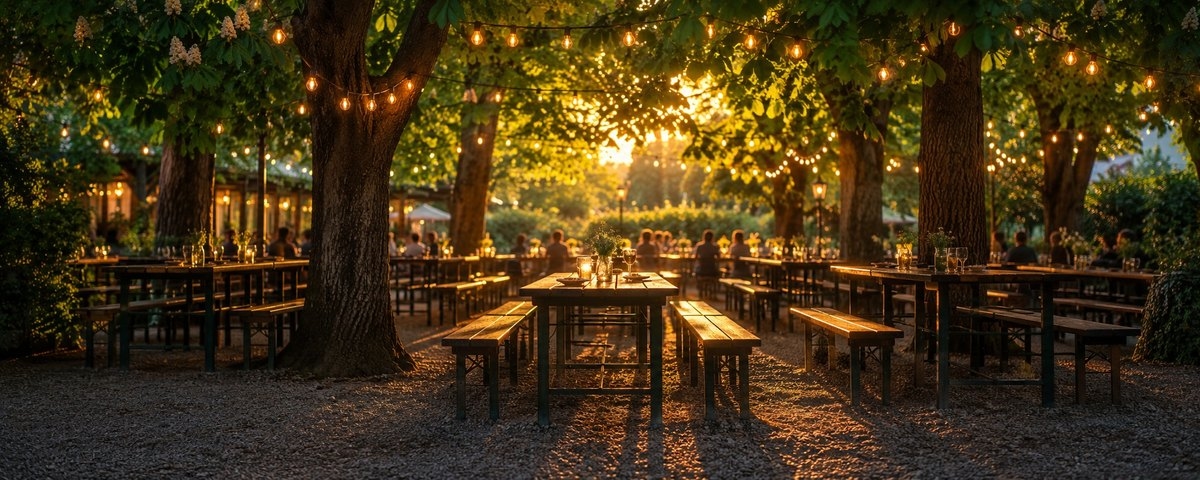
- A beer garden or an outdoor table in the warmer months, where shared tables make conversation easy.
- A walk in a park or along a river. Costs nothing and is easier than sitting opposite a stranger.
- A museum or exhibition. Useful across a language gap, and a reliable Sunday option.
- A market during opening hours. Bright, busy and full of small shared decisions.
- A cultural event. Low pressure, with other people in the room.
Arrange your own way there and back, and pick somewhere central enough that either of you can leave early without it being a statement.
Talking About Relationship Expectations
Whether exclusivity is assumed at a certain point or explicitly agreed varies by person rather than by place. Given that many people here are comfortable saying what they want, raising it directly is unlikely to be read as heavy.
Two subjects matter more when one of you has moved: how long you expect to stay, and which language a relationship would settle into. Both cost less raised in the first weeks than in the sixth month. Our guide to dating as an expat covers that in more detail.
Meeting friends or family does not carry one fixed meaning. Ask what it means to them rather than deciding.
Staying Safe on a First Date in Germany
- Meet somewhere public and central, and easy to find.
- Arrange your own transport both ways.
- Tell a friend where you are going and when you expect to be back.
- Keep your phone charged and enough money to leave at any point.
- Do not share your home address before meeting.
- Never send money, whatever the reason given.
- Use the block and report tools on anything that feels wrong.
Our dating safety advice covers the warning signs in detail.
Germany Is Not One Single Dating Culture
The differences inside the country are large. Berlin's international population and social scene look nothing like a mid-sized town in the south or the west. University cities skew younger and turn over each year. Rural areas are smaller and more settled. The east and west still differ in ways that matter to some people and not to others, and plenty of residents have roots in several countries.
We are deliberately not characterising regions by temperament. Where you are matters because of who lives there and how life is organised, not because of a regional personality.
Frequently Asked Questions
What is dating culture like in Germany?
Plans are often made in advance, evenings start earlier than in southern Europe, and many people are comfortable saying plainly what they want. Beyond that, expectations vary by city, age and individual more than by nationality.
Do I need to speak German to date in Germany?
In the larger cities, often not, particularly among younger people and international communities. Outside them it matters more. It shapes who you meet either way, so it is worth asking which language someone prefers rather than assuming English.
What is the difference between du and Sie on a date?
They are the informal and formal forms of address. In most social and dating settings among younger people du is normal from the start, but the distinction exists and moving between them can carry meaning. Following the other person's lead is the simplest approach.
Is punctuality different in Germany?
Punctuality is a personal trait rather than a national one, and we would not describe a whole country that way. If a start time matters to you, say so when you arrange the meeting.
How can I meet expats and local people in Germany?
Repeated activities work best: clubs, classes, sports, volunteering. International associations help in the first weeks, and keeping one locally organised commitment stops a social life becoming entirely international. See how to meet people in a new country.
What should I avoid assuming?
That plain speech means rudeness, that an advance invitation means disinterest, that everyone prefers English, that greetings carry romantic meaning, and that one city describes the country.
Related Reading
Explore Expat Dating in Germany
Who is actually here, which cities have the larger international communities, and what a first meeting tends to look like locally.