
Dating Culture in Spain: What Expats Should Know
Dating culture in Spain is most often described through its timing — later evenings, longer meals — but what actually catches newcomers out is subtler: how social life is organised around groups, how warmth reads, and how plans get made. All of it can vary enormously. Spain holds large international cities, coastal towns with long-settled foreign communities, university cities and rural areas, and several languages are in daily use. There is no single Spanish dating experience, and city, age, language and social circle shape it far more than nationality does. This is context for better questions, not a set of rules. For the wider picture, see dating culture around the world.
How People Meet in Spain
Several routes coexist, and which dominates depends on the person and the place:
- Through friends. Introductions within an existing group are common, and a group setting is often where a first conversation happens.
- Through activities. Sports clubs, classes, hiking groups, dance, amateur sport.
- Through work or study. Particularly in university cities and among younger people.
- Through international groups. Language exchanges, expat associations and coworking communities, more visible in the larger cities and on the coast.
- At events. Local festivals, neighbourhood celebrations, concerts and cultural programmes.
- On dating platforms. Widely used, and often the first route for someone who has recently arrived.
- Through neighbourhood life. The same bar, the same market, the same square, over time.
We would not claim any one of these is dominant nationally, because that would need data we do not have.
Social Life and Dating
Friendship groups can matter more than newcomers expect. Plans are often made for a group rather than a pair, and being invited into one early is common. It is usually a sign of inclusion rather than hesitance, and it is frequently how people get to know someone properly before anything one-to-one happens.
That has a practical consequence. An evening may involve six people when you expected two, and reading that as a rejection misreads it. Equally, a one-to-one invitation is not necessarily more significant than a group one.
The adjustment most worth making is separating friendliness from romantic interest. Social warmth — an easy conversation, an invitation extended to everyone, physical closeness while talking — is ordinary behaviour in many settings and is not a signal. Interpreting every interaction as an opening is the most common newcomer mistake, and it makes otherwise relaxed situations awkward for both people.
Timing and Planning a Date
Some social plans can start later than visitors expect, and a meeting proposed for ten in the evening may simply be dinner rather than a late-night proposition. That said, timings vary by city, by job and by person: someone working early shifts keeps different hours from someone in hospitality, and a weekday differs from a weekend everywhere.
Confirm the time and the place rather than assuming either. "Tonight" and "later" carry different meanings to different people, and a specific venue avoids the problem entirely.
On punctuality, we would avoid the stereotype. How precisely someone keeps to a time is a personal trait, and describing a whole country as punctual or otherwise is exactly the kind of shortcut that produces unfair expectations. If timing matters to you, say so pleasantly when you arrange it.
Asking is better than inferring. "What time usually works for you?" settles it in one message.
Communication and Language
Spanish is the official language of the state, and several co-official languages are used daily in their regions — Catalan, Galician, Basque and Valencian among them. Which language a conversation settles into can carry meaning locally, and it is worth noticing rather than assuming.
Do not assume someone would rather speak English. Many people will, particularly in larger cities and among younger members, but switching without asking can land as a presumption. Asking which language they would prefer is a small courtesy that is noticed.
Be honest about your own level. Claiming more Spanish than you have produces an uncomfortable first meeting; saying "I'm learning, be patient with me" usually produces goodwill. Making an obvious effort tends to go down well; presenting it as a project you expect the other person to run does not.
Humour and irony travel badly in any second language, in both directions. If a remark lands oddly, ask rather than deciding what it meant. And resist correcting someone's English unprompted — it changes the dynamic quickly and is rarely welcome.
Affection, Personal Space and Consent
Social greetings vary and do not automatically indicate romantic interest. Two kisses on greeting is a common convention in many settings; so is a handshake, and so is neither, depending on the context, the region and the people involved. None of it is a signal in itself.
How much physical affection someone is comfortable with in public, or at all, is personal rather than national. Some people are demonstrative and some are not, exactly as anywhere else.
Ask, and respect the answer. Consent is not a cultural variable, and no local convention obliges anyone to accept physical contact they do not want. If you are unsure how to greet someone, following their lead or simply asking is always acceptable.
Dating Local People and Other Expats
Dating local people in Spain
A Spanish partner changes daily life here in a way that time alone does not: how family routines work, what holidays actually involve, the version of the language people use with friends, the places that never appear in a guide. What to avoid is treating someone as a shortcut into the culture or as language practice; it is noticed, and it is a poor foundation.
Dating other expats in Spain
You start from shared ground — the residency appointment, the bank that wants an impossible document, Christmas being a flight or a phone call. Often a shared working language too. The conversation worth having early is about time, because contracts end and plans change.
Neither is better and many people do not choose. You can meet expats and international singles in Spain through our destination guide, which also covers where our community is actually concentrated.
First-Date Ideas in Spain
Public, easy to reach and easy to leave. These categories work in most Spanish cities and will not go out of date:
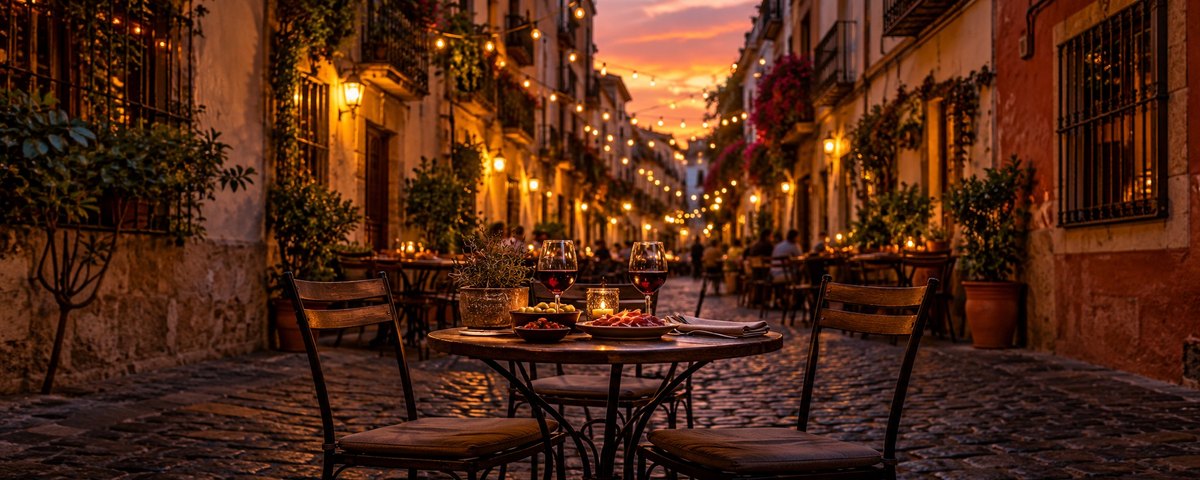
- A coffee or a drink on a terrace. Outdoors, public, and it can last twenty minutes or three hours without anyone deciding in advance.
- A walk through a busy area. Costs nothing, and walking side by side is easier than sitting opposite a stranger.
- A museum or a temporary exhibition. Useful across a language gap, because there is something in front of you to talk about.
- A food market during opening hours. Bright, busy, and full of small decisions made together.
- A seafront walk in coastal cities, where the promenade at the end of the afternoon does the work for you.
- A cultural event. Low pressure by design, with other people in the room if conversation does not take off.
Talking About Relationship Expectations
Assumptions here vary by person far more than by place. Whether exclusivity is assumed at a point or explicitly agreed, whether something is serious or casual, how often people expect to be in contact — all of it is worth saying rather than inferring.
Two subjects matter more when one of you has moved: how long you expect to stay, and which language a relationship would settle into. Both are easier raised in the first weeks than the sixth month.
Meeting friends or family does not carry a fixed meaning. For some people it is a significant step; for others the group was always going to be there on Saturday. Ask what it means to them rather than deciding what it means.
Staying Safe on a First Date in Spain
- Meet somewhere public and central, and easy to find.
- Arrange your own transport both ways.
- Tell a friend where you are going and when you expect to be back.
- Keep your phone charged and enough money to leave at any point.
- Do not share your home address before meeting.
- Never send money, whatever the reason given.
- Use the block and report tools on anything that feels wrong.
Our dating safety advice covers the warning signs in detail.
Spain Is Not One Single Dating Culture
Experiences differ widely across the country. Large cities hold varied international populations and the fastest-changing social scenes. Coastal areas include long-settled foreign communities whose social life looks quite different from a capital's. University cities skew younger and turn over each academic year. International communities, where they exist, operate partly in their own languages. Rural areas are smaller and more settled, with everything that implies in both directions.
We are deliberately not characterising regions by temperament. Where you are matters because of who lives there and how life is organised, not because of a regional personality.
Frequently Asked Questions
What is dating culture like in Spain?
Social life is often organised around groups, plans can run later than visitors expect, and warmth is not in itself a romantic signal. Beyond that, expectations vary by city, age and individual, so the honest answer is that there is no single pattern to learn.
Do I need to speak Spanish to date in Spain?
No, particularly in larger cities and among younger people. It does shape who you meet and how far early conversations go, so it is worth knowing which language a relationship would settle into. Effort is generally appreciated; do not assume English is preferred.
Are first dates in Spain usually formal?
Not especially. A drink on a terrace or a walk is a very common first meeting, and group settings often come before a one-to-one. Some people prefer something more planned, which is a personal preference rather than a national rule.
Is punctuality different in Spain?
Timings for social plans can run later than in some other countries, but punctuality itself is a personal trait. Treat a relaxed attitude to a start time as information about an individual, and simply confirm the time and place when you arrange it.
How can I meet expats and local people in Spain?
Repeated activities work best: sports clubs, classes, language exchanges, volunteering. International associations help early on, and keeping at least one locally organised activity stops a social life becoming entirely international. Dating platforms let you say in advance what you are looking for.
What should I avoid assuming?
That friendliness means romantic interest, that everyone keeps the same hours, that English is the preferred language, that greetings carry meaning, and that one region's experience describes the country. Ask rather than assume is the whole of it.
Related Reading
- Dating as an expat: what changes when you live abroad
- How to meet people when you move to a new country
- Dating abroad as an expat
- Browse all expat dating advice
City guides for Madrid, Barcelona, Valencia and Málaga will be linked here once they are published.
Explore Expat Dating in Spain
Who is actually here, which cities have the larger international communities, and what a first meeting tends to look like locally.